

Procurement for mass‑production self tapping screws is not only comparing unit price. Ignoring several core evaluation points will cause unexpected loss on production line, including high reject rate, re‑work cost and project delay. This article sorts practical evaluation dimensions for buyers when sourcing self tapping screws.
Thread type matching your application
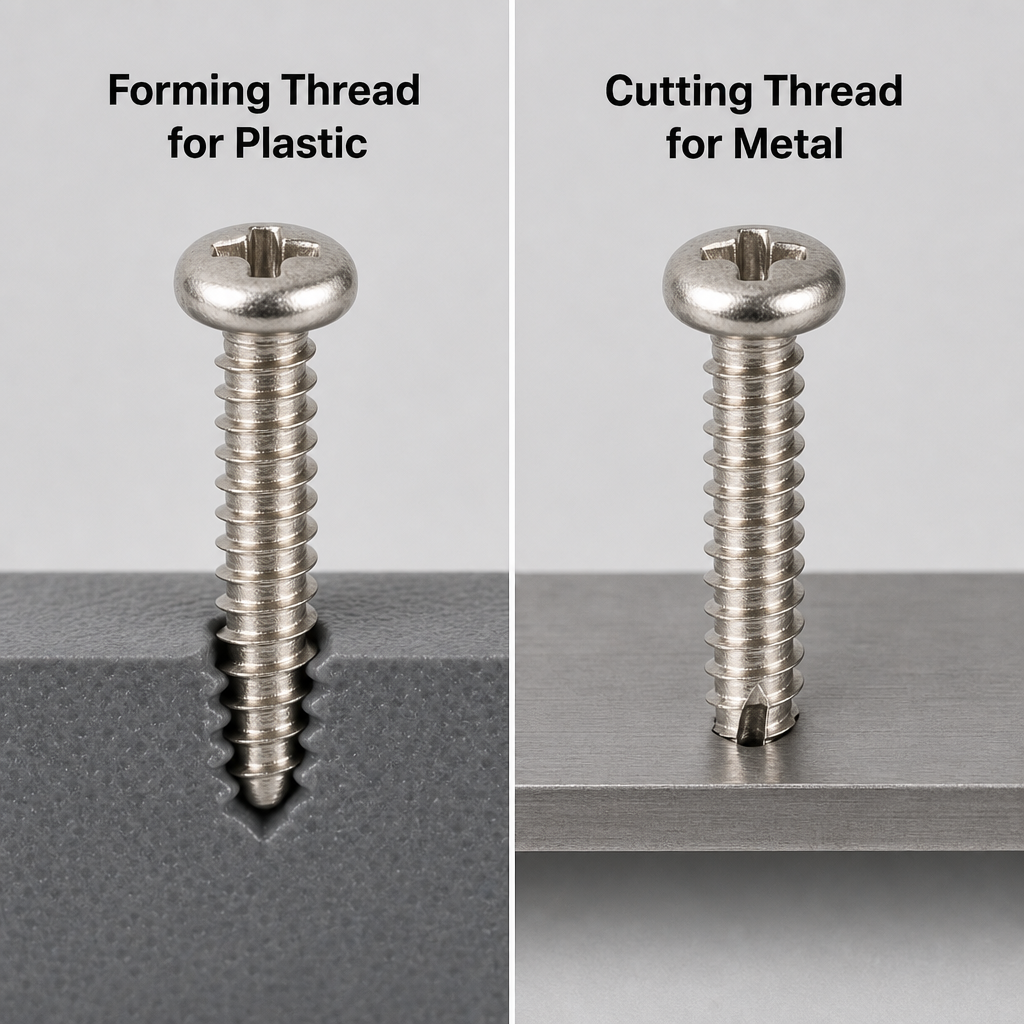
Thread type decides fastening performance of self tapping screws. Thread‑forming version focuses on anti‑cracking for plastic components. Thread‑cutting type fits rigid thin metal sheets. Do not pick thread style only according to price. Confirm your workpiece substrate first, then select corresponding self tapping screws.
Material and surface finish assessment
Working environment sets requirement for material of self tapping screws. Indoor dry condition can adopt cost‑effective carbon‑steel self tapping screws with zinc plating. Humid, coastal or outdoor working condition requires stainless‑steel grade. Surface treatment can improve rust resistance but cannot replace base‑material performance.

Batch consistency capability
Many purchasers meet good sample quality but unstable bulk goods when buying self tapping screws. Hardness, thread dimension and surface condition may shift batch‑to‑batch without strict production control. You should confirm whether the supplier owns complete testing procedure for self tapping screws before placing large order.
Pilot‑hole data support
Qualified fastener supplier should offer pilot‑hole reference suggestion for self tapping screws. Different thickness and hardness of workpiece need different hole size. Without proper reference data, buyers spend extra time on repeated trial‑and‑error on site.
Custom order support
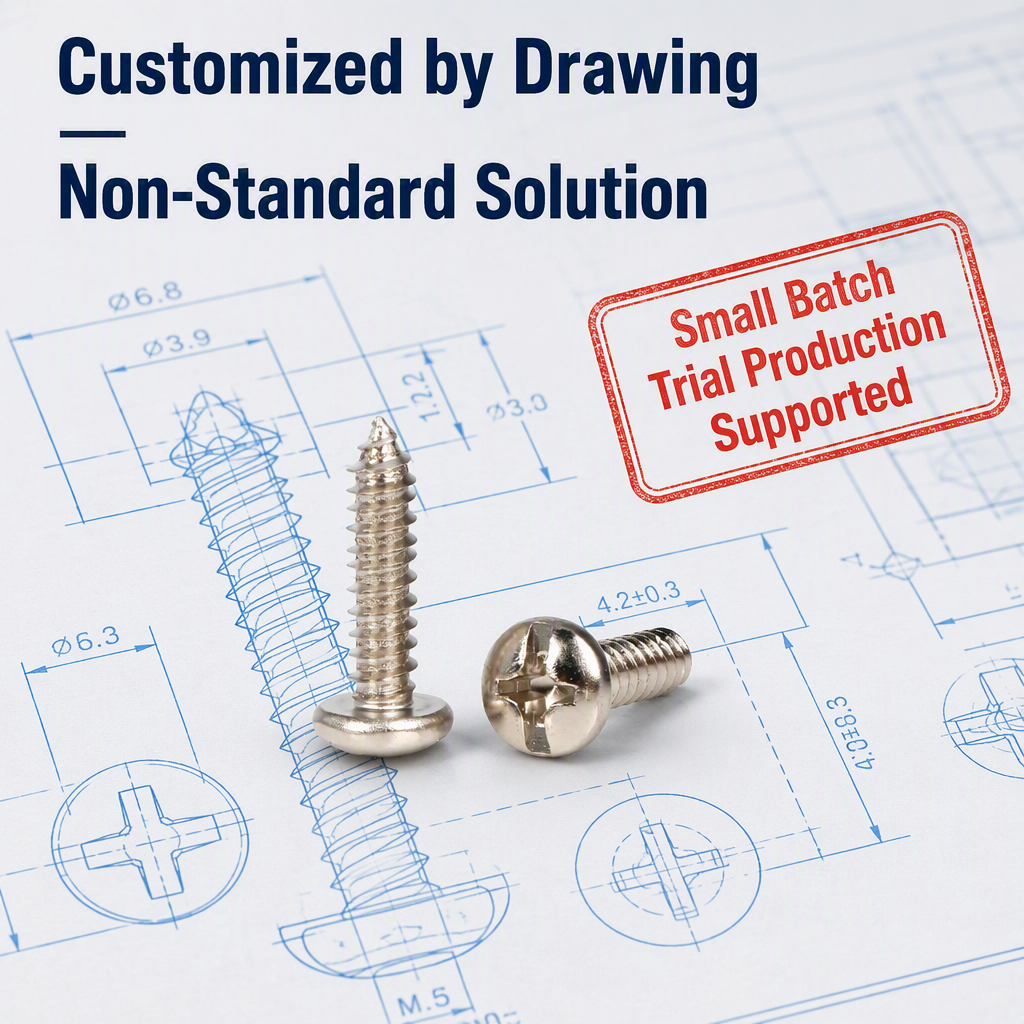
Standard catalog items cannot cover all project requirements. When you need non‑standard self tapping screws, check if the supplier accepts drawing‑based customization and small‑batch trial order. Trial production helps you avoid mass‑production risk.
Final suggestion for buyers
When sourcing self tapping screws, balance unit‑cost with hidden risk brought by bad assembly. Sample testing, technical communication and small‑batch trial are necessary steps before mass procurement.
Post time: Aug-19-2026





