

Set screws (grub screws) are tiny head‑less fasteners widely used for shaft locking, gear positioning and coupling fixation across automation, transmission and instrument hardware. Many engineers only check thread size and length during sourcing set screws, and overlook several hidden risk points. These oversights trigger unexpected field breakdowns after mass installation. Below is a practical risk‑check checklist summed‑up from real OEM procurement cases.
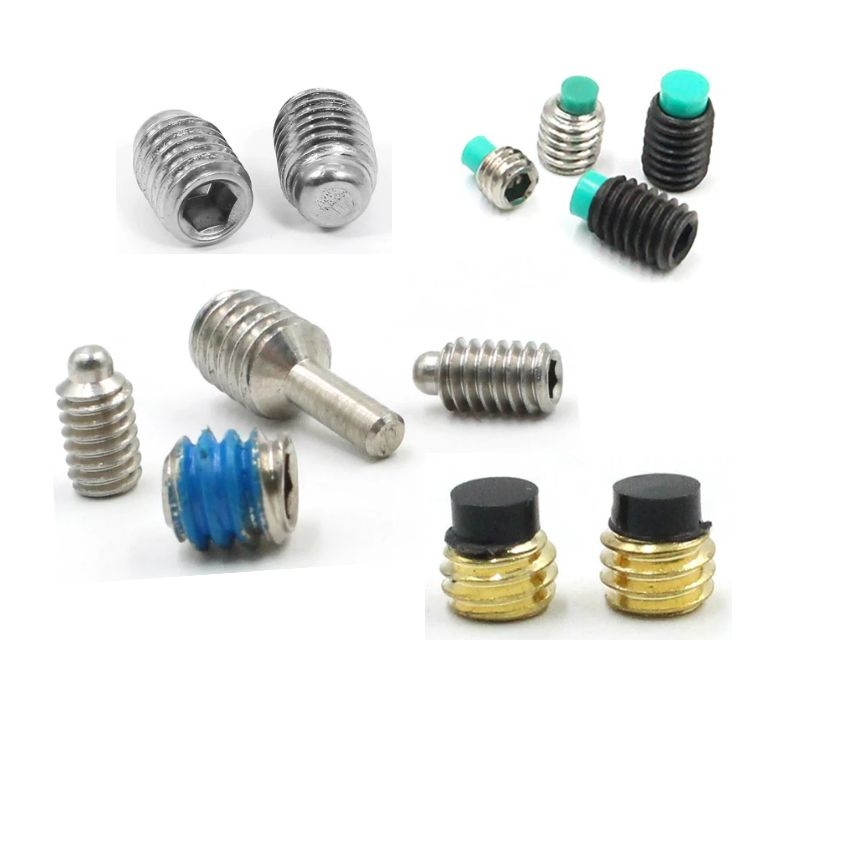
Risk‑Check 1: Confirm tip geometry matches your contact surface
Tip type is the most overlooked variable for set screws.
- If shaft allows indentation and needs anti‑rotation lock: go for cup‑point set screws
- If shaft surface must stay scratch‑free: select nylon‑pad set screws
- If you have pre‑machined locating recess on shaft: pick dog‑point set screws
- For temporary adjustment without heavy bite: flat‑point set screws
Mismatched tip will either fail locking function or permanently damage precision shaft surfaces.

Risk‑Check 2: Verify material grade against working environment
- Indoor general‑purpose locking: carbon‑steel set screws work well with cost advantages
- Humid, coastal or lightly corrosive atmosphere: switch over to 304 /316 stainless‑steel set screws
- Avoid mixing material spec just to cut unit cost; rust on small set screws may cause whole‑unit positioning failure.

Risk‑Check 3: Inspect thread & drive‑recess tolerance requirement
Poor thread tolerance on set screws leads to jamming or loose fit when screwing into tapped holes. Hex‑socket drive recess with bad dimension will bring frequent allen‑key slipping during assembly. For automated assembly or high‑precision instrument projects, clearly mark thread tolerance and drive dimension requirements on your drawing, do not rely only on nominal size labels.

Risk‑Check 4: Judge whether anti‑loosening treatment is necessary
For equipment running under cyclic vibration: plain metal‑to‑metal set screws tend to back out over operation cycles. Two feasible options:
- Specify pre‑applied nylon patch anti‑loosening set screws
- Reserve space for applying medium‑strength thread locker on production site

Risk‑Check 5: Mandatory sample verification before mass‑production order
Do not directly release large purchase orders based only on datasheet and price quotation. Carry out real‑condition validation tests with supplied samples of set screws:
- Mount onto actual customer‑spec shaft sample
- Run locking / unlocking cycles
- Observe slipping, shaft‑surface damage or drive‑recess wear after repeated tightening
Only pass sample assessment, then proceed to bulk‑order placement.

Closing note
Though set screws look simple and low‑cost, wrong sourcing decisions create expensive after‑sales repair for finished equipment. Do not treat them as trivial spare parts. Hand over your shaft material, vibration condition and surface‑protection requirements to fastener suppliers, so they can give you targeted specification suggestions.
Click Here To Get Wholesale Quotation | Free SamplesPost time: Aug-26-2026





