banner (1)

3d printed metal parts - Wholesale Manufacturers

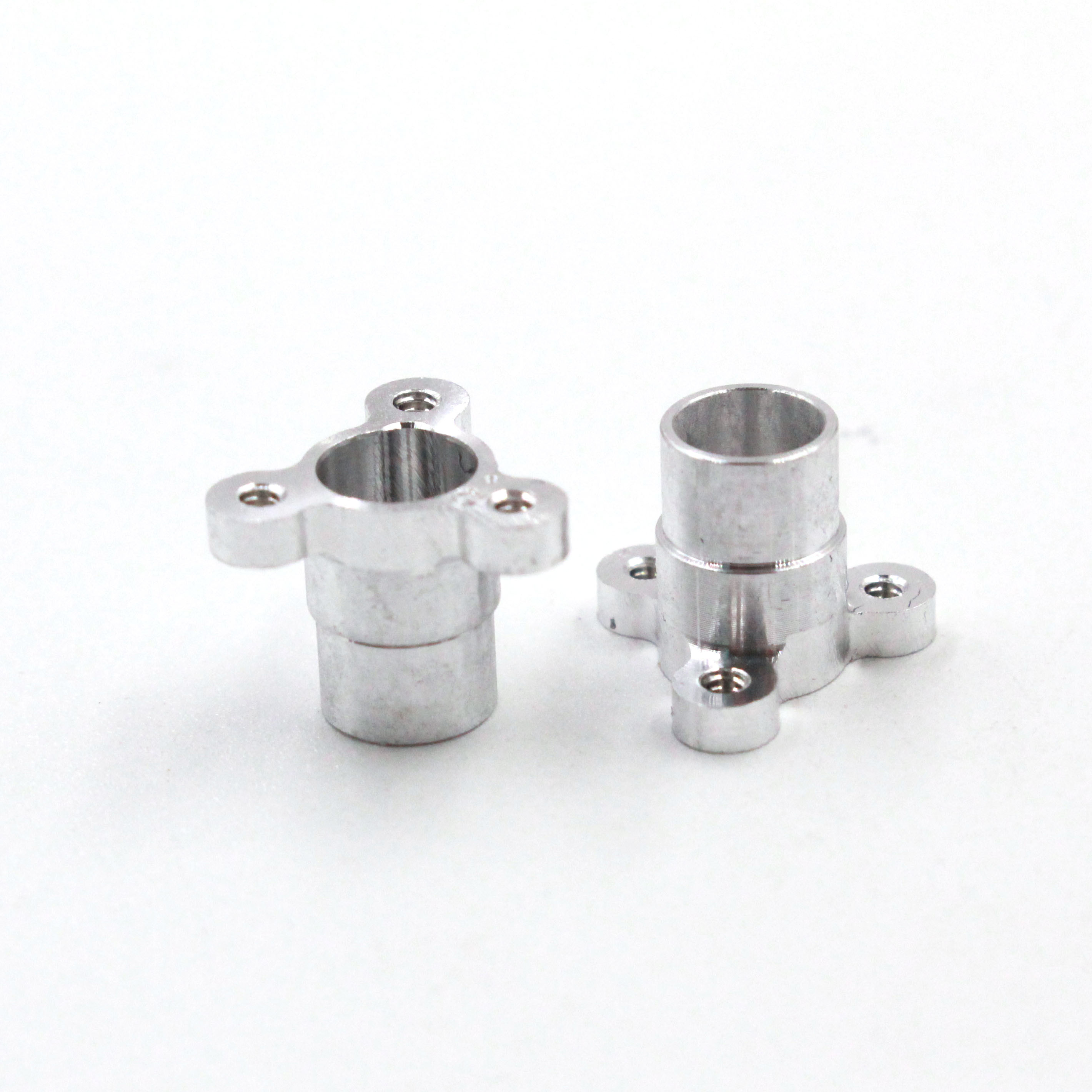
From a practical standpoint, I deliver 3d printed metal parts that meet the toughest specs for volume production and rapid prototyping. Our facility uses high-quality metal powders and precision additive manufacturing to produce consistent 3d printed metal parts. I work with wholesale channels and manufacturers to ensure you get scalable solutions, quick lead times, and predictable pricing. When you partner with me, you gain direct access to engineered components that reduce assembly steps and inventory costs. I tailor production to your CAD models or we can co-design for weight, strength, and heat resistance. My QA checks include dimensional metrology, surface finish, and material certification to ISO quality standards. For {Wholesale} and {Manufacturers}, I offer flexible MOQs, batch traceability, and responsive logistics. Whether you need end-use parts or tooling inserts, I provide reliable supply chain support from prototype to high-volume production, backed by technical support and transparent pricing. Let’s connect to align on your project timeline and budget.

Hot Selling Product

3d printed metal parts Service For the Current Year

This year, metal additive manufacturing enables reliable production of complex parts through powder bed fusion (DMLS/SLM), electron beam melting (EBM), and binder jetting. Global buyers can source finished components in stainless steel, aluminum, titanium, and nickel alloys with tight tolerances, from rapid prototypes to medium-volume production. Advances in automation, in-situ monitoring, and traceability support quality-critical applications. Benefits include design freedom for integrated features, weight reduction, and part consolidation that lower assembly costs. On-demand production reduces inventory risk, while scalable fabrication enables quicker fulfillments for diverse industries. Post-processing options—debinding, heat treatment, HIP, surface finishing, and precision machining—support strict specs with robust quality controls and metrology. To optimize sourcing, share CAD data, tolerances, material and finish requirements, quantity, and delivery timelines. DFAM guidance helps optimize build orientation and minimize supports. Plan for post-processing and validation, and ensure secure data handling to protect intellectual property during the design-to-production flow.

3D Printed Metal Parts Service For The Current Year

Part ID Material Part Type Build Orientation Build Volume (cm³) Estimated Weight (g) Layer Resolution (μm) Surface Finish (Ra μm) Additive Process Post-processing Lead Time (days) Certifications
P-001 Inconel 718 Turbine Housing XY-Top 25 210 20 6 DMLS HIP + Grinding 12 ISO 9001, AS9100
P-002 Ti-6Al-4V Aerospace Bracket Z-Up 40 480 30 7 SLM HIP + Machining 16 AS9100, ISO 9001
P-003 Stainless Steel 316L Gear Housing XY 18 140 25 8 DMLS Deburr + Heat Treatment 9 ISO 9001
P-004 Aluminum AlSi10Mg Lightweight Bracket 45° Face 60 165 15 5 SLM Anodizing + QPQ 7 ISO 9001
P-005 Ti-6Al-4V Tooling Insert XY 22 240 25 6 DMLS Deburr + Polish 11 ISO 9001
P-006 Stainless Steel 17-4 PH Valve Component XY 12 132 20 6 SLM Heat Treatment 8 ISO 9001
P-007 Inconel 625 Exhaust Manifold XY 28 290 30 7 DMLS Grinding + Polish 14 ISO 9001, AS9100
P-008 Aluminum AlSi10Mg Gear Rack XY 25 165 15 4 SLM Anodizing 6 ISO 9001
P-009 CuCrZr Heat Exchanger Block XY 35 315 12 5 DMLS Polishing 10 ISO 9001
P-010 Ni-based Alloy 625 Spacer XY 18 210 18 6 DMLS Polishing 9 ISO 9001

Related Products

banner (2)

3d printed metal parts Industry Giant Where Service Meets Innovation

Data Dimension: Production Volume by Part Type

This dataset explores production volume across distinct part types manufactured within the metal additive manufacturing sector, where service-driven models intersect with ongoing innovation in design, materials, and post-processing. The dimension labeled Production Volume by Part Type provides a focused lens on how capacity is distributed among representative applications, ranging from high-volume, repeatable geometries to more customized, engineering-centric parts. The six categories—Aerospace Components, Automotive Parts, Industrial Machinery Housings, Medical Device Housings, Robotics Enclosures, and Energy Sector Components—serve as a synthetic yet plausible cross-section of possible demand patterns in a modern metal 3D printing ecosystem. The values reflect a hypothetical annualized output in units, illustrating how certain segments drive aggregate capacity while others contribute meaningful niches that benefit from rapid prototyping, flexible tooling, and tailored manufacturing workflows. Interpreting the chart, Automotive Parts emerge as the largest contributor, suggesting substantial throughput in high-volume, repeatable configurations. Aerospace Components and Industrial Machinery Housings also show strong demand, indicating robust multi-sector adoption where dimensional stability, material performance, and reliable post-processing pipelines are critical. Medical Device Housings and Robotics Enclosures, while smaller in this example, highlight the value of customization, regulatory compliance, and rapid iteration cycles that metal AM uniquely enables. The synthetic data reinforce several practical insights: scale remains tightly linked to process automation, automated inspection, and the efficiency of the end-to-end digital thread—from CAD updates to post-processing and certification. For service providers, the takeaway is clear: invest in flexible equipment lines, scalable post-processing capabilities, and modular workflows that can adapt to shifting demand across diverse part types. Though simplified, this visualization demonstrates how a data-driven perspective can illuminate which segments are poised for growth, where bottlenecks may appear, and how to align investments with strategic capabilities in a technology-driven manufacturing landscape.

Top Selling Products