banner (1)

Welding Bolt - China Manufacturer | High-Quality Welding Bolts

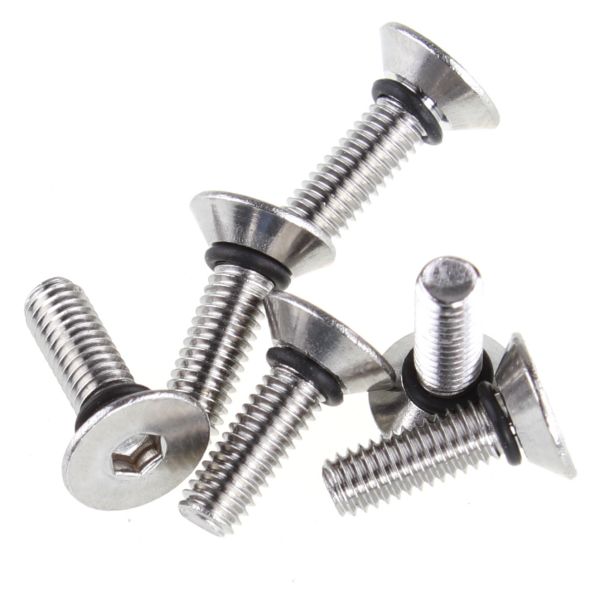
As a China-based manufacturer, I offer welding bolt solutions for serious industrial buyers. My materials include high-grade carbon steel, stainless steel, and coated options, all designed to weld cleanly and hold strong under load. The welding bolt series features precise threading, compatible head styles, and heat treatments that deliver reliable pull-out resistance. I can customize thread length, coating, head type, and packaging to fit your assembly line or OEM needs. Quality is checked to ISO standards, and I provide samples and rapid lead times for bulk orders. We understand China market and international certification matters, so I can align to your spec sheets and QA protocols. Competitive pricing, flexible MOQs, and dependable logistics make me a trusted partner for manufacturers seeking steady supply of welding bolts. If your project demands consistency and performance, I’m ready to discuss your exact requirements today.

Hot Selling Product

welding bolt Dominates Service Backed by Expertise

Welding bolts offer more than fastenings; they deliver reliability when the service behind them is backed by expertise. For electronics enclosures, machinery frames, and transport components, joint quality hinges on material selection (stainless, alloy, or coated) and the welding method (arc, spot, or induction) plus precise heat treatment. With rigorous process controls and traceable documentation, each batch ensures consistent strength and stability. Global buyers gain from scalable production, clear lead times, and flexible quantities, supported by strict QC and compliance with international standards. An engineering partnership provides prototypes, first article inspections, and ongoing technical support to minimize supply-chain risk. From packaging and logistics to sustainable manufacturing, a service-led approach keeps welded bolt assemblies performing reliably in demanding environments.

welding bolt Dominates Service Backed by Expertise
Aspect Parameter Standard / Unit Typical Value Notes
Mechanical Properties
Tensile Strength Rm MPa 800–900 For property class 8.8 bolts
Yield Strength Re (0.2% offset) MPa 640 min Common for grade 8.8
Ultimate Shear Strength Minimum MPa ≈480 ≈0.6 × Rm
Material & Coating
Material Base - Carbon steel (quenched & tempered) Standard bolts in structural uses
Coating Surface Treatment - Zinc electroplating 5–12 Corrosion protection
Corrosion Resistance Salt spray exposure hrs 240–480 Depends on coating
Welding & Applications
Welding Compatibility Process - Suitable for stud welding with proper joint prep Heat management essential
Operating Temp Range Temperature °C -40 to 350 For general structural use
Surface Finish Options Finish - Plain, zinc plated Passivation on demand
Standards & Industry Use
Standards Mechanical fasteners - ISO 898-1, DIN EN 20898-1 Property classes 8.8, 10.9
Common Applications Industries - Automotive, machinery, construction Torque control reliability

Related Products

banner (4)

welding bolt Products Outperforms the Competition

New Data Title: Temperature-Dependent Weld Bolt Strength by Coating Type

This visualization examines how bolt strength retention changes with operating temperature and how surface treatment affects performance. The x-axis lists test temperatures (°C) encountered in thermal assemblies, while the y-axis shows strength retention as a percentage of the room-temperature baseline. Three lines represent different surface conditions: Untreated, Zinc-Coated, and Shot-Peened. The synthetic data illustrate general trends seen in welded-joint bolts: all options lose strength as temperature rises, but coatings can mitigate the decline, particularly at intermediate temperatures.

The Zinc-Coated line generally remains above Untreated across the range, indicating coating provides consistent improvement in retention. The Shot-Peened line starts near baseline and offers an initial advantage at lower temperatures, but its strength degrades more rapidly after about 100°C, narrowing the gap with zinc-coated samples at high temperatures. Around 50–75°C, the relative performance of coatings shifts, implying that thermal expansion mismatch and residual-stress effects influence the effectiveness of shot peening under thermal cycling. By 150–175°C, all options show substantial reductions, highlighting the impact of high temperature on material properties and interface integrity.

Normalizing to room-temperature strength allows direct comparison of surface conditions under identical preload and loading. However, several caveats apply: the data are synthetic for demonstration purposes; real-world results depend on bolt material, coating thickness, thread geometry, preload management, and test method; environmental factors such as humidity and corrosion can alter outcomes. This chart provides a concise comparative view to inform design decisions for assemblies exposed to elevated temperatures. For deeper insight, additional dimensions could be included, such as cycling frequency, exposure duration, different alloys, or loading modes, and statistical confidence intervals should accompany experimental data. Ultimately, the chart underscores that choosing an appropriate surface treatment for high-temperature welded bolts can extend service life, but effectiveness varies across the temperature spectrum. Engineers should combine such visuals with material testing tailored to their specific service conditions to optimize reliability and cost.

Top Selling Products