banner (1)

Custom Stud Bolt Stainless Steel for Factories

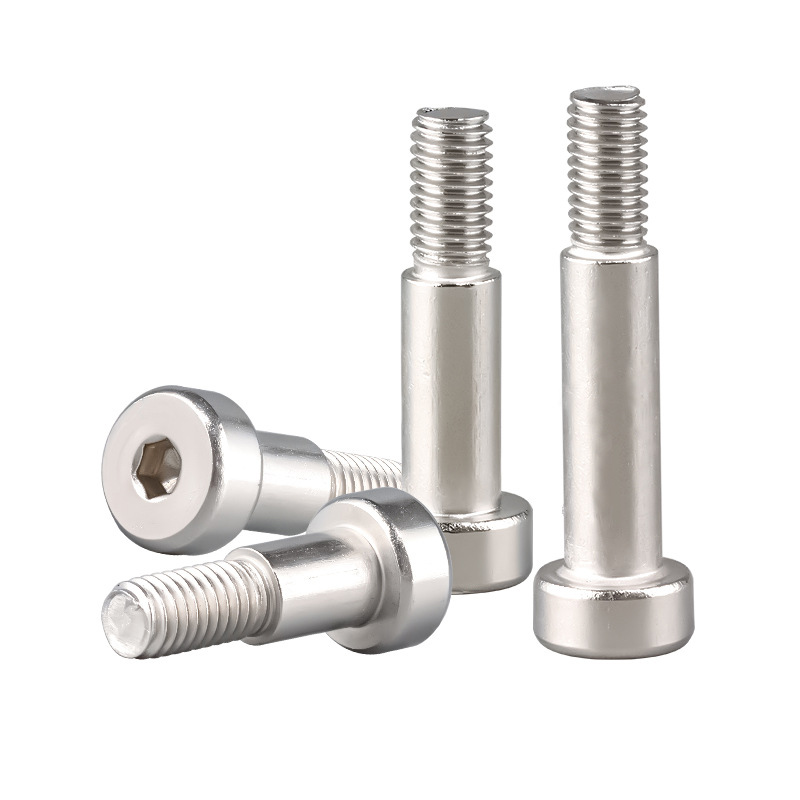
I specialize in stud bolt stainless steel solutions built for high-demand production environments. For Custom needs and Factories, I can tailor lengths, thread sizes, and head styles to fit your joints precisely. Our studs are made from corrosion-resistant stainless steel (304/316 grade) with proven tensile strength, ideal for machines, structural frames, and heavy equipment. In addition to standard items, I offer heat-treated options and surface finishes to reduce galling and improve torque performance. Packaged in bulk or on reels, they ship quickly to your site or plant. If you’re aiming to streamline procurement, I can quote Custom configurations to match your BOM, ensuring traceability and quality docs. Let’s talk about your specs, and I’ll tailor a solution that keeps your production moving.

Hot Selling Product

stud bolt stainless steel For the Current Year Trusted by Pros

For the current year, stainless steel stud bolts remain a trusted choice for professionals building critical connections in harsh environments—marine, oil and gas, chemical plants, and heavy construction. Grades such as 304 (A2) and 316/316L (A4) offer excellent corrosion resistance, stable mechanical properties, and easy fabrication. With full- or partial-thread designs and tight tolerances, they provide reliable load transfer, reduced galling, and predictable torque control even in humid, saline, or high-temperature settings. Global buyers seek a supplier who guarantees material traceability, rigorous testing, and dependable logistics. Important factors include verified chemical composition, mechanical testing, non-destructive checks, and clear batch documentation. Compliance with international standards (ISO 9001, DIN/ISO/ASME equivalents) ensures consistent quality, while scalable production and reliable lead times keep projects on schedule across regions. A capable partner offers competitive pricing, secure packaging, and strong global shipping to support long-term procurement success.

{ stud bolt stainless steel For the Current Year Trusted by Pros}

Spec (Size x Length) Grade / Material Thread Length (mm) Tensile Strength (MPa) Finish Standard Application Notes
M6 x 40 A2-70 (304/304L) M6 x 1.0 40 Min 700 Passivated DIN 938; ISO 898-1 Flange connections, general piping Double-ended; medium load
M8 x 60 A2-70 (304/304L) M8 x 1.0 60 Min 700 Passivated DIN 938; ISO 898-1 Flange connections, water treatment Double-ended; standard length
M8 x 100 A4-80 (316/316L) M8 x 1.25 100 Min 800 Passivated ISO 898-1; DIN 938 Marine and corrosive environments Higher corrosion resistance
M10 x 80 A4-80 (316/316L) M10 x 1.5 80 Min 800 Passivated ISO 898-1; DIN 938 Offshore piping, chemical plants High strength, corrosion resistant
M10 x 120 A2-70 (304/304L) M10 x 1.5 120 Min 700 Passivated DIN 938 General piping and flange work Standard length variant
M12 x 100 A2-70 (304/304L) M12 x 1.75 100 Min 700 Passivated DIN 938; ISO 898-1 Flange assemblies, industrial vessels Common mid-size strap
M12 x 150 A4-80 (316/316L) M12 x 1.75 150 Min 800 Passivated ISO 898-1 Marine and high-corrosion areas Longer reach option
M16 x 200 A4-80 (316/316L) M16 x 2.0 200 Min 800 Passivated ISO 898-1; DIN 938 Large flange systems, petrochemical Heavy-duty use
M20 x 250 A4-80 (316/316L) M20 x 2.5 250 Min 800 Passivated ISO 898-1; DIN 938 Large-diameter piping, pressure vessels High load capacity

Related Products

banner (3)

stud bolt stainless steel For the Current Year Your Trusted OEM Partner

Monthly Momentum: Production vs Export of Stainless Steel Stud Bolts (Current Year)

The chart presents monthly domestic production and export shipments for stainless steel stud bolts during the current year. The production line (blue) starts around 120 thousand units in January, climbs steadily to a peak near 200 thousand units in August, and then eases slightly toward year-end. The export line (orange) begins about 40 thousand units in January, rises more gradually, reaching roughly 100 thousand units by August, then fluctuates between 70 and 92 thousand units through December. The two series share a common time axis, which makes it possible to examine the relative scale and timing of domestic manufacturing versus international shipments.

The observed pattern indicates moderate seasonality in both production and exports, with stronger activity during spring and summer. The expansion in production aligns with higher demand in mid-year inventory restocking and the lead times associated with contractual commitments. Export volumes rise in the first half of the year and plateau in the second half, suggesting that international demand is steadier but subject to quarterly order cycles. The gap between production and exports, which widens in some months, points to substantial domestic fulfillment, while the portion of output directed to export markets remains sizeable but not dominant.

Methodology and limitations: The numbers are synthetic yet designed to resemble plausible manufacturing and trade patterns for stud bolts. The chart uses a single linear y-axis to compare volumes in thousand units. The data do not capture price fluctuations, product variants such as thread size or material grade, or regional distribution. They also do not account for stock levels, backlogs, or seasonality beyond monthly aggregation. For more actionable insights, integrating price trends, cost of goods sold, order backlogs, and capacity utilization would help assess margins and risk. Finally, year-over-year comparison would reveal growth dynamics and help forecast capacity needs for the upcoming year.

Top Selling Products