banner (1)

Stainless Steel Knurled Thumb Screws - China Manufacturer

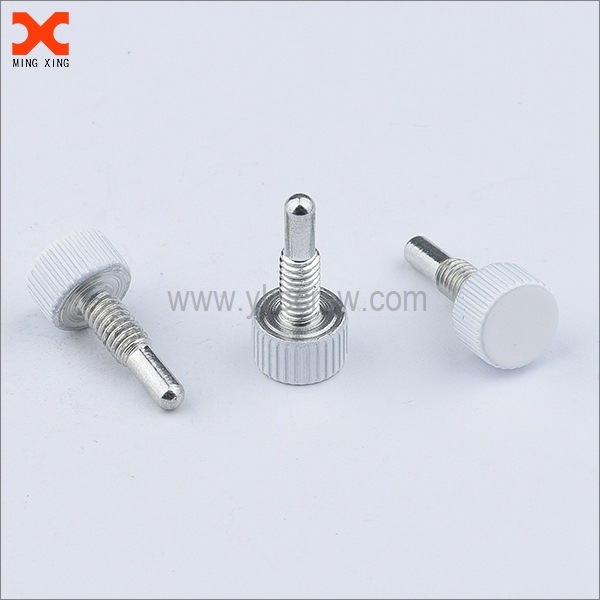
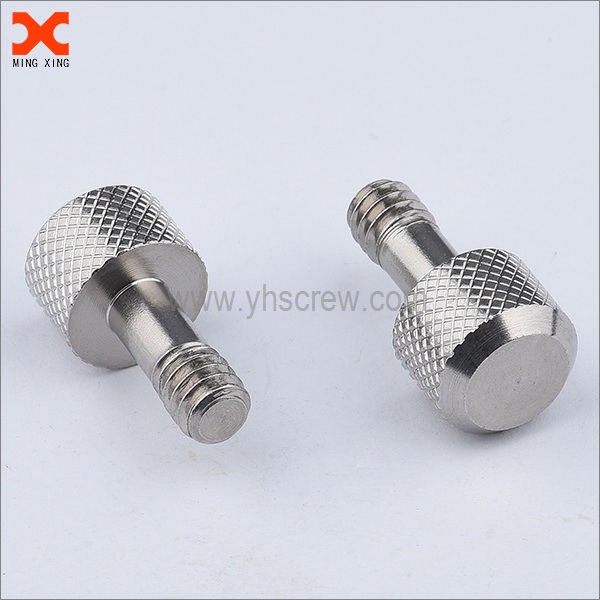
I handle stainless steel knurled thumb screws made for fast, secure hand-tightening in challenging environments. As a China-based Manufacturer, I supply Stainless Steel Knurled Thumb Screws in 304 and 316 grades with polished or passivated finishes, designed to resist corrosion and light chemical exposure. The knurled head provides excellent grip for tool-free assembly, even with gloves, while the shallow thread and shoulder prevent over-tightening. I offer common metric sizes from M3 to M12 and lengths to fit your enclosure, panel, or fixture, with tight tolerances to ensure repeatable assembly. These screws suit electronics, machinery housings, lighting, cabinetry, and outdoor applications. I can meet high-volume demands with efficient production and reliable on-time delivery. If you’re searching for a steady supplier of Stainless Steel Knurled Thumb Screws, we’ll work with your drawings or samples and quote quickly, cutting downtime and boosting your assembly lines.

Hot Selling Product

Stainless Steel Knurled Thumb Screws Winning in 2025 Your End-to-End Solution

Stainless steel knurled thumb screws are winning in 2025, delivering reliable hand-tightened fastening for electronics enclosures, machinery, and consumer devices. With corrosion-resistant stainless steel, precise knurling, and robust threads, they perform in harsh environments and during quick-maintenance cycles. Standard sizes in 304 and 316 stainless steel meet diverse corrosion, temperature, and cleanliness requirements, while easy hand-tightening reduces assembly time across global production lines. An end-to-end solution covers design input, material selection, prototyping, high-volume production, quality control, packaging, and global logistics. Buyers gain traceability, tight tolerances, RoHS/REACH compliance, and flexible minimums, minimizing risk and lead times. By partnering with a capable manufacturer in a major electronics hub, global procurement teams can secure scalable supply, rapid iterations, and reliable after-sales support, ensuring fast time-to-market and sustained value for electronics assemblies worldwide.

Stainless Steel Knurled Thumb Screws Winning in 2025 Your End-to-End Solution
Model Material Grade Head Diameter (mm) Shank Diameter (mm) Length (mm) Thread Size Drive Style Knurl Pattern Surface Finish Load Capacity (N)
KRS-304-4x0.7-8 AISI 304 6.5 4.0 8 M4 x 0.7 Slotted Fine Passivated 60
KRS-304-5x0.8-10 AISI 304 7.0 5.0 10 M5 x 0.8 Hex Socket Medium Brushed 90
KRS-316-6x1.0-12 AISI 316 8.2 6.0 12 M6 x 1.0 Slot Coarse Polished 120
KRS-304-8x1.25-16 AISI 304 9.0 8.0 16 M8 x 1.25 Hex Socket Fine Passivated 150
KRS-316-8x1.25-20 AISI 316 9.5 8.0 20 M8 x 1.25 Slotted Medium Brushed 165
KRS-304-10x1.5-25 AISI 304 12.0 10.0 25 M10 x 1.5 Hex Socket Coarse Passivated 210
KRS-316-12x1.5-30 AISI 316 12.0 12.0 30 M12 x 1.5 Cross (PH) Fine Polished 250
KRS-304-5x0.8-7 AISI 304 6.0 5.0 7 M5 x 0.8 Slotted Fine Brushed 70

Related Products

banner (3)

Stainless Steel Knurled Thumb Screws Products Industry Giant

Data Dimension: Time-based Production and Quality Indicators

New Chart Title: Monthly Production and Quality Metrics Over Time

Explanation: This chart uses a time-based data dimension to explore production volume and quality outcomes for a line of stainless steel knurled thumb screws. The x-axis represents months in a year, and the two y-axes show different units: production volume in thousands of units on the left, and defect rate in percent on the right. The dual-series line chart allows comparing how throughput and quality move together over time. Production peaks in late summer, coinciding with a ramp-up in shipments for a major procurement cycle, while defect rate remains within a narrow band, indicating stable process control. Some months with very high output show a slight uptick in defects, suggesting a capacity-performance trade-off when running at higher speeds or with tighter schedules. In contrast, months with more moderate production often display lower defect rates, implying improvements due to preventive maintenance, operator training, or process stabilization. The data dimension highlighted is time-based, enabling short-term and seasonal trend analysis. Observing the relationship between the two metrics helps identify potential causes of quality variation, such as equipment wear, material batch differences, or changes in inspection frequency. The chart also reveals cyclic patterns, where defect rate dips after quality interventions or after optimization of setup procedures. By quantifying the magnitude of the fluctuations, managers can estimate the required inspection effort, schedule preventive maintenance during low-production windows, and align procurement with demand while maintaining acceptable quality. The visualization underscores the importance of balancing throughput and quality: pursuing higher production without adequate controls can lead to disproportionate defect rates; conversely, investing in quality improvements can sustain reliability while preserving reasonable output. For future planning, this data dimension supports scenario analysis, where different production targets and quality targets can be simulated to assess impact on overall performance. In sum, the time-based production and quality metrics provide actionable insight for production planning, quality assurance, and operational optimization across the yearly cycle.

Top Selling Products