banner (1)

M5 Socket Head Cap Screws - China Manufacturer of Precision Hardware

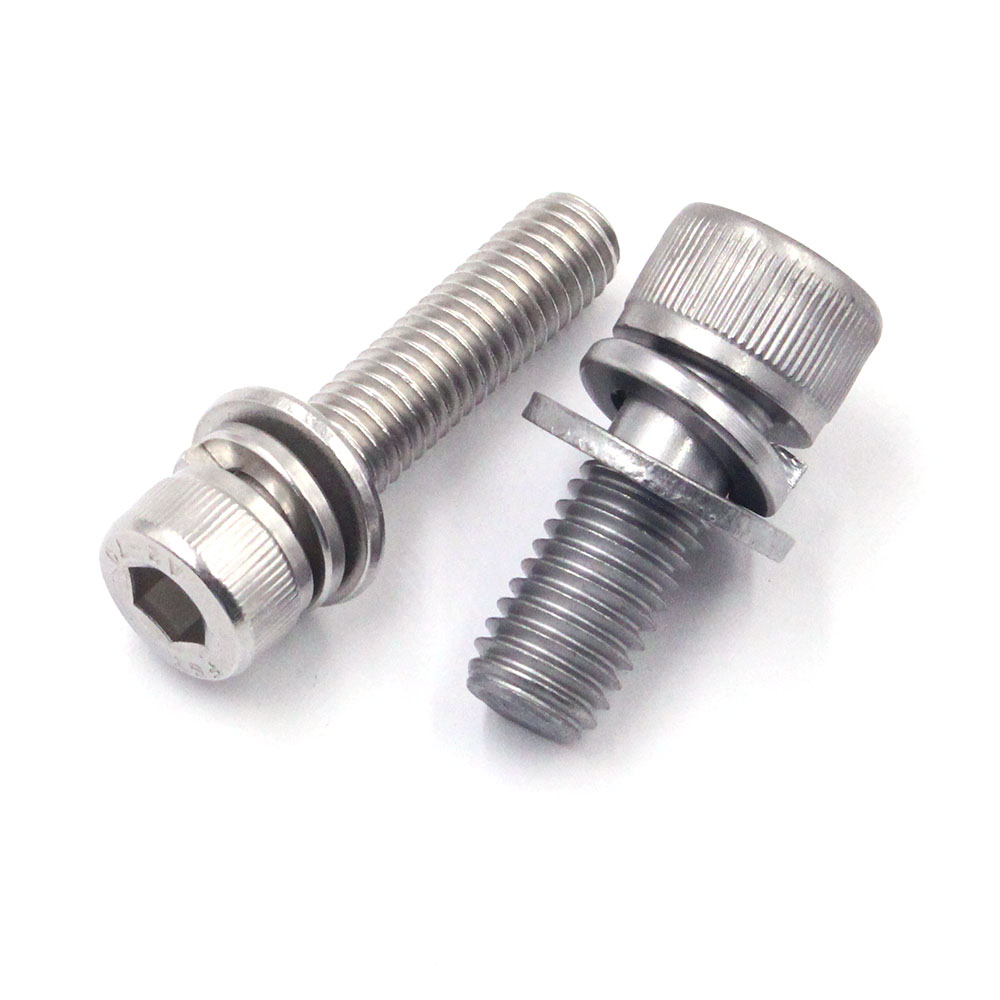
We are a China-based Manufacturer of industrial fasteners, and we proudly offer M5 Socket Head Cap Screws to meet tough machine-building demands. For B2B buyers, reliability and repeatable performance matters—and that's exactly what we deliver. Our M5 Socket Head Cap Screws are produced from high-grade alloy steel or stainless steel, heat treated for strength, and finished with black oxide, zinc, or passivated coatings. We can supply standard grades or tailor lengths, thread pitch, and head styles to your drawings. With tight tolerances and rigorous quality checks, you can count on consistent fit every time. We keep a robust stock, shorten lead times, and provide certificates of compliance and test reports to speed your QA process. Whether your project is automation, electronics, or heavy machinery, our technical team supports spec confirmation, proto samples, and bulk production. Reach out for a competitive quote and reliable supply of M5 Socket Head Cap Screws today.

Hot Selling Product

M5 Socket Head Cap Screws Manufacturer Dominates

In the world of fasteners, M5 socket head cap screws have become indispensable for compact assemblies in electronics, automation, and machinery. A leading manufacturer commands a dominant share by combining precise metrology, scalable production, and rigorous quality control—from raw material selection and heat treatment to thread rolling and surface finishing. With options in alloy steel and stainless steel, and finishes such as zinc plating or black oxide, this segment delivers consistent strength, corrosion resistance, and dimensional stability across high-volume runs. For global buyers, this means reliable supply chains, predictable lead times, and traceable quality across batches. A dominant producer leverages advanced CNC machining, automated inspection, and ISO-compliant processes to meet tight tolerances and fast ramp-ups. Partners across industries—from consumer electronics to automotive components—benefit from scalable MOQs, transparent pricing, and responsive support that keeps development on schedule.

{ M5 Socket Head Cap Screws Manufacturer Dominates}
Specification Typical Value Remarks
Screw designation M5 × 6–40 mm (common lengths: 6, 8, 10, 12, 16, 20, 25, 30, 35, 40) Metric coarse thread; widely used length range
Nominal thread diameter 5.00 mm ISO metric designation
Thread pitch 0.8 mm (standard coarse) Per ISO metric coarse thread series
Material options Alloy steel (quenched & tempered); Stainless (A2/A4) Alloy for high strength; stainless for corrosion resistance
Mechanical grade 8.8, 10.9, 12.9 Select grade according to load and safety factor
Minimum tensile strength 8.8 ≈ 800 MPa; 10.9 ≈ 1040 MPa; 12.9 ≈ 1220 MPa Values approximate per ISO metric bolt grades
Hardness (approx.) 8.8: ~24–32 HRC; 10.9: ~30–38 HRC; 12.9: ~36–44 HRC Post heat-treatment hardness ranges
Head type & dimensions Socket head cap; head dia ≈ 8.5–9.0 mm; head height ≈ 4.5–5.5 mm Typical per ISO 4762 / DIN 912-style geometry
Internal hex (Allen) size 3.0 mm Standard for M5 socket head screws
Thread length (typical) Varies by L; many fully threaded ≤20 mm; partial thread common on longer lengths Depends on application and standard blanking practices
Surface finishes Bright (uncoated), black oxide, zinc (clear/yellow), nickel plating, passivated stainless Finish affects corrosion resistance and appearance
Corrosion resistance (qualitative) Bright steel: low; Zinc plated: moderate; A2 stainless: good; A4 stainless: excellent Choose based on expected environment
Typical applications Machine assembly, automation equipment, tooling, fixtures, dies, electronic enclosures Widely used where compact head & high clamping force required
Standards & references ISO 4762 / DIN 912 / EN ISO 4762 (metric socket head cap screw standards) Follow dimensional and mechanical property clauses in the standards
Manufacturing methods Cold heading + thread rolling; secondary machining for tight tolerance parts; quench & temper heat treatment; surface finishing Common industrial production flow
Typical mass (example) M5 × 20 mm ≈ 1.8 g per piece (approx.) Useful for shipping/weight calculations; mass varies with material and finish

Related Products

banner (3)

M5 Socket Head Cap Screws Leads the Global Market From Concept to Delivery

Data Dimension: Lead Time Trend Across Production Months

This chart presents the monthly trend of delivery lead time (in days) across a representative production year, illustrating a data dimension that connects manufacturing throughput to on-time performance. The x-axis represents calendar months, while the y-axis records the average time from order receipt to shipment. The plotted values provide insight into how operational factors such as capacity utilization, supplier reliability, changeovers, and queueing effects influence delivery speed. In the sample data, lead times peak in February and May, drop through the summer, and stabilize toward year end. The observed range—from a low near eight to ten days to a high around fifteen days—highlights the level of variability a production system can experience. Interpreting these patterns requires considering both internal process changes and external influences such as seasonal demand fluctuations and supplier schedules. For supply chain managers, tracking this dimension over time supports risk assessment, inventory planning, and capacity decisions. When lead times extend, it can signal bottlenecks in raw materials, longer setup times, or transportation delays; when they contract, it may reflect successful lead-time reduction initiatives, better forecasting, or smoother changeovers. The chart also provides a baseline to evaluate the impact of improvement programs, such as standardizing assembly steps, investing in automation, or aligning supplier calendars with production plans. Visual cues, such as sustained upward trends or abrupt dips, prompt deeper analysis to locate root causes and to design countermeasures. While the current visualization focuses on lead time, it can be complemented by additional series such as monthly production volume or order fill rate to enrich interpretation. Overall, the data dimension captured here helps translate early-stage design and planning decisions into tangible delivery performance and customer satisfaction outcomes. This perspective supports data-driven decisions throughout the concept-to-delivery lifecycle and fosters continuous improvement. This enables faster corrective actions and better customer outcomes.

Top Selling Products