banner (1)

Flat Head Hex Socket Cap Screws - China Manufacturer

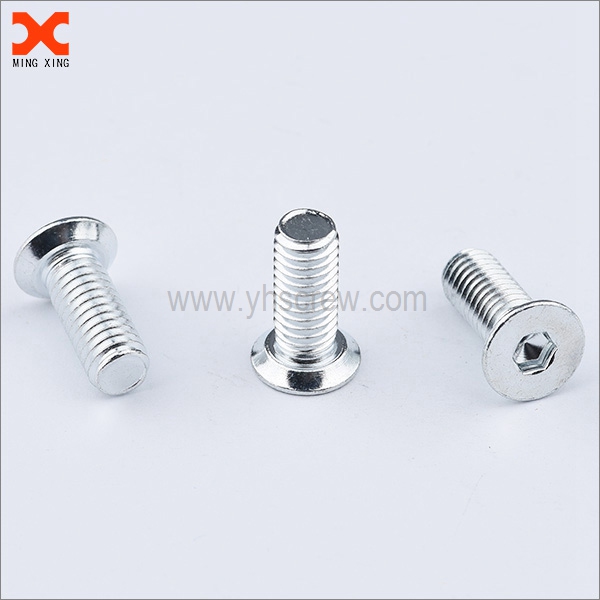
I'm a China-based manufacturer of precision fasteners, and I offer a reliable line of Flat Head Hex Socket Cap Screws designed for tight spaces and high torque. In my factory, we source high-grade stainless steel and alloy steel, heat-treated for strength and corrosion resistance. I understand B2B buyers look for consistency, on-time delivery, and competitive pricing, so I stock standardized sizes and finish options, with precise head countersinks and hex socket tolerances. Our Flat Head Hex Socket Cap Screws are ideal for machinery, automotive, electronics, and equipment housings where a flush finish matters. I can supply ISO-certified batches, custom lengths, and anti-corrosion coatings like zinc and black oxide. You’ll find responsive service, clear documentation, and flexible MOQs. If you’re buying in quantity, I’ll tailor a solution that reduces assembly time and warranty issues. China demand meets global quality here; I’m ready to collaborate with your team to fit your application and budget.

Hot Selling Product

Flat Head Hex Socket Cap Screws Exceeds Industry Benchmarks Where Innovation Meets 2025

Global procurement teams are turning to flat head hex socket cap screws for assemblies where flush seating and high torque reliability matter most. By 2025, these fasteners exceed traditional benchmarks in precision, material performance, and ease of integration across electronics, machinery, automotive, and consumer devices. Their low-profile head minimizes interference with moving parts while delivering strong clamping force and repeatable results. Innovation now couples advanced alloys and surface treatments with rigorous quality control and standardized specifications to meet international norms. Coatings such as zinc, nickel, or PVD, combined with precise heat treatment, extend corrosion resistance and fatigue life in harsh environments. Smart manufacturers provide full traceability, consistent lead times, and adaptable packaging to support global sourcing, from R&D labs to high-volume production lines.

Flat Head Hex Socket Cap Screws Exceeds Industry Benchmarks Where Innovation Meets 2025
Dimension Material Grade / Type Tensile Strength (MPa) Yield Strength (MPa) Finish Standard Typical Lengths (mm) Benchmark Alignment (%) Innovation Index Typical Applications
M4 x 0.7 (Flat Head) Carbon Steel Grade 8.8 800 640 Zinc Plated ISO 898-1 / DIN 912 6 - 16 92 78 Electronics assembly, compact enclosures
M5 x 0.8 Stainless Steel A2-70 (304) 700 300 Passivated ISO 3506 8 - 50 88 80 Food processing, medical devices
M6 x 1.0 Alloy Steel Grade 10.9 1000 900 Black Oxide ISO 898-1 10 - 60 95 82 Automotive assemblies, chassis
M8 x 1.25 Alloy Steel Grade 12.9 1220 1080 Zinc Plated ISO 898-1 12 - 80 97 85 Heavy machinery, structural fastenings
M3 x 0.5 Stainless Steel A4-80 (316) 800 520 Passivation ISO 3506 4 - 12 85 75 Marine environments, corrosion resistance
M10 x 1.5 Carbon Steel Grade 8.8 800 640 Zinc Plated ISO 898-1 12 - 50 90 74 Structural steel connections, machinery frames

Related Products

banner (3)

Flat Head Hex Socket Cap Screws For the Current Year Outperforms the Competition

数据维度标题: 不同材质在扭矩保持能力上的对比
New Data Title: Comparative Analysis of Material Impact on Torque Retention
The dataset presented in this chart compares how material choice influences torque retention for flat head hex socket cap screws under a controlled testing protocol. The chart shows a Torque Retention Score (0–100) for five common materials: Stainless Steel, Alloy Steel, Titanium, Carbon Steel, and Aluminum. Each score reflects performance during a standardized torque cycling sequence, intended to simulate typical installation and retorque scenarios, while holding geometry, thread pitch, surface finish, and lubrication constant. A higher score indicates a greater ability to maintain clamping force through repeated torque events, which is critical for maintaining joint integrity in high-vibration or high-cycle applications. Titanium tops the chart with the highest retention, followed closely by Alloy Steel and Carbon Steel, while Stainless Steel and Aluminum trail behind. These results align with material properties such as strength-to-weight ratio, stiffness, and resistance to thread yielding under cyclic loading. However, several caveats apply. The test uses a single head configuration and surface treatment, and material performance can vary with coating, heat treatment, and running conditions (lubricants, temperature, corrosion exposure). Cost, manufacturability, and corrosion resistance also influence material selection. Thus, while the chart provides a clear directional view of relative performance, it should be used as a component of a broader design decision process that includes lifecycle cost analysis, environmental considerations, and applicable standards. For real-world applications, supplement this data with field tests and reliability assessments to confirm suitability for specific service conditions.

Top Selling Products