banner (1)

Brass Thread Insert - China Manufacturer for Durable Fasteners

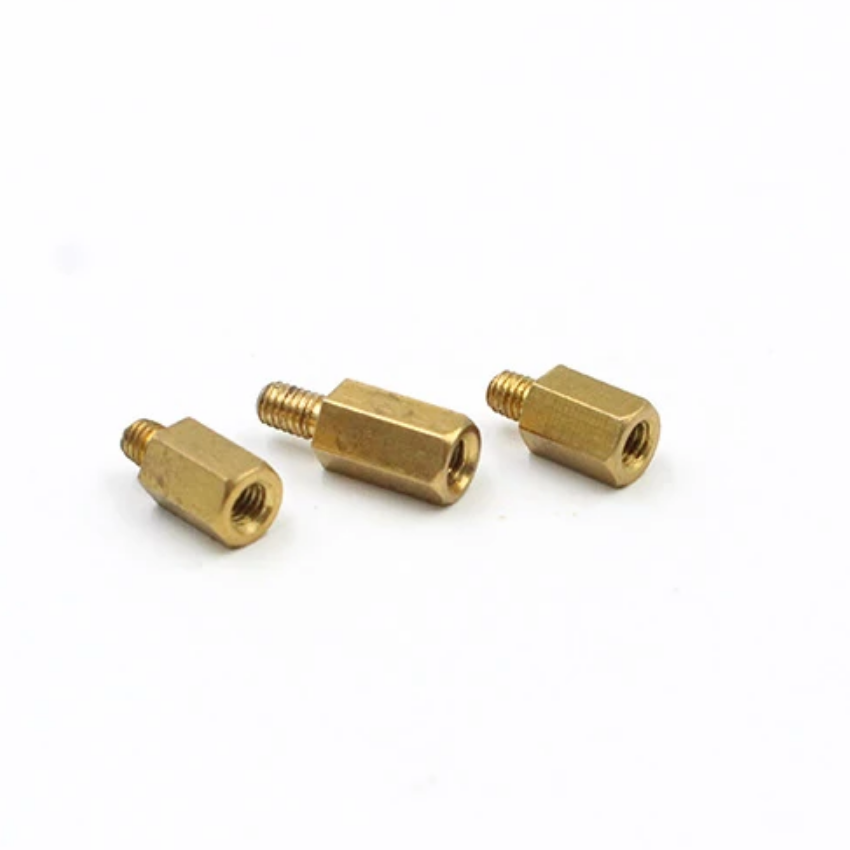
As a China-based manufacturer, I offer high-quality brass thread inserts that reinforce threads in plastics and soft metals. Buyers like you value reliable supply, precise dimensions, and good pricing, so I keep tight tolerances and plating options to suit different applications. My brass thread insert provides smooth insertion, strong pull-out resistance, and long service life, perfect for automotive, electronics, and consumer goods. I can supply a wide range of sizes and thread types, including metric and inch standards, with press-in, heat-set, or self-tapping varieties. I also offer quick lead times, customized packaging, and flexible MOQs to support OEM production. If you’re sourcing in China, partnering with a manufacturer who controls the full process makes your supply chain simpler and safer. I’m ready to discuss your design and deliver a tailored brass thread insert solution that meets your performance and cost targets.

Hot Selling Product

brass thread insert Products Industry Leaders

Global buyers are increasingly turning to brass thread inserts as compact, high-reliability fasteners for plastic and metal assemblies. Brass offers good corrosion resistance, stable temperature performance, and precise threads that reduce wear during assembly. Leading producers combine precision stamping, CNC machining, and strict inspection to ensure tolerances and reliable engagement. Install methods range from heat-set and press-in to self-tapping options, with plating and thread profiles tailored to the application. Global sourcing teams should evaluate suppliers on quality systems, material traceability, and performance data such as torque-out and pull-out strength. Request samples and test assemblies, verify compatibility with plastics, temperatures, and chemical exposure, and review third-party inspection reports. Consider lead times, minimum order quantities, packaging, and logistics. Certifications (RoHS/REACH) and environmental controls matter for cross-regional supply chains. A capable partner provides technical guidance, scalable production, and reliable delivery to support multi-region programs and total cost efficiency.

Brass Thread Insert Products – Industry Leaders
Region Product Type Thread Size Length (mm) Material Grade Surface Finish Tensile Strength (MPa) Lead Time (days) Market Share (%) Primary Application
North America Self-clinching Brass Thread Insert M4 6 CuZn39Pb3 Plain 450 4 18 Automotive
Europe Self-tapping Brass Thread Insert M4 8 CuZn39 Nickel-plated 410 5 15 Electronics
Asia-Pacific Press-in Brass Thread Insert M3 4 CuZn39 Plain 420 3 22 Machinery
Latin America Swaged Brass Thread Insert 1/4-20 9 CuZn39Pb3 Nickel-plated 480 6 9 Consumer Goods
Middle East Self-clinching Brass Thread Insert M5 6 CuZn39Pb3 Black oxide 395 5 6 Aerospace Components
Africa Press-in Brass Thread Insert M6 10 CuZn39 Plain 520 7 5 Energy & Utilities
Europe - Northern Swaged Brass Thread Insert M3 5 CuZn39 Nickel-plated 400 4 8 Automotive
Asia-Pacific - South Self-tapping Brass Thread Insert 1/4-20 7 CuZn39Pb3 Zinc-plated 430 3 12 Consumer Electronics
North America - Midwest Press-in Brass Thread Insert M5 8 CuZn39 Plain 415 4 7 Machinery Components
Europe - Central Self-tapping Brass Thread Insert M6 6 CuZn39 Nickel-plated 390 6 4 Industrial Equipment

Related Products

banner (2)

brass thread insert Ahead of the Curve Outperforms the Competition

Data Dimension: Insertion Design Performance Benchmark

The chart presents a synthetic benchmarking scenario comparing five brass thread insertion design variants using a common Performance Index scale from 0 to 100. The objective is to illustrate how design choices influence assembly reliability and durability under standardized torque and vibration conditions. The Ahead-of-Curve variant leads with a performance index around 92, reflecting superior thread engagement, optimized seating, and improved load distribution that minimize micro-movements during high-cycle operation. Variant-1 achieves roughly 84, indicating meaningful gains from refined engagement geometry and surface treatment, though not as pronounced as the leading design. Variant-2 at 78 and Variant-3 at 74 demonstrate diminishing returns as certain geometric or processing parameters are simplified, underscoring the importance of balanced design trade-offs between manufacturability and reliability. The Legacy design at 70 serves as a baseline to highlight how traditional configurations may underperform in modern assembly environments, especially where torque variation and vibration are common. From a decision-making perspective, this visualization conveys several actionable insights. First, incremental design improvements can yield substantial performance gains when they affect critical engagement zones. Second, the relative comparison across variants supports prioritization of design changes that deliver the largest reliability benefits with acceptable manufacturing complexity. Third, the 0–100 scale facilitates quick cross-functional discussions, enabling procurement, manufacturing, and engineering teams to align on which variants offer the best balance of performance, cost, and lead time. While the data here are synthetic, the relationships reflect established engineering principles: enhanced thread engagement, robust seating, and appropriate surface treatments contribute to higher assembly integrity and longer service life in demanding applications. In summary, the chart communicates that the Ahead-of-Curve design outperforms rivals by delivering consistent engagement and resilience under typical operating variances.

Top Selling Products